Welcome to the Wordlady blog!

This blog is about the fascinating, fun, and challenging things about the English language. I hope to entertain you and to help you with problems or just questions you might have with spelling and usage. I go beyond just stating what is right and what is wrong, and provide some history or some tips to help you remember. Is something puzzling you? Feel free to email me at wordlady.barber@gmail.com.
You can also order my best-selling books, Six Words You Never Knew Had Something to do With Pigs and Only in Canada You Say. Fun and informative!

Subscribe!

Subscribe! Fun facts about English delivered weekly right to your inbox. IT'S FREE! Fill in your email address below.
Privacy policy: we will not sell, rent, or give your name or address to anyone. You can unsubscribe at any point.

Search This Blog

Friday, November 6, 2015

The Queen and her hairs

If you were watching the swearing-in of the new Canadian prime minister, you may have noticed that he pronounced "heirs" like "hairs" rather than "airs" (starting at 1:28)

https://youtu.be/gVmZQk1_RMw?t=1m28s


I am not bringing this up to deride or disparage Justin Trudeau's command of English, since he possesses a high level of bilingualism that most of us can only envy. 

Rather, I find it an interesting question: why DO we say "air" and not "hair" for "heir", especially considering that the etymologically related "heritage" and "inherit" are both pronounced with "hair"? One can never accuse English of being consistent!

"Heir" is in fact one of only four words in standard English (along with their derivatives) starting with a silent "h:. The other three are "honest", "honour", and "hour" (in some varieties of English, "herb", "human", "huge", and "humour" are also on the list). These prove particularly tricky for francophones, who never pronounce "h" in their own language and work very hard to do so in English...only to discover that we've stuck some into our language that aren't pronounced. It must seem like a wily trap, especially for those making solemn oaths in front of millions of people.

All these words share the same history, tracing back to Latin words written and pronounced with an "h". In the case of "heir", the Latin word was hēres. By the end of the Latin era, though, the initial "h" was no longer pronounced, so when Latin evolved into Old French, the word became eir. Legal terms were one of the big categories of words we borrowed from the Normans, so English acquired "eir". No "h" in the pronunciation or the spelling. 

But in the Renaissance, there was a move in English to reflect the Latin origins of our words by re-inserting letters into the spelling that had been there in Latin but had long since been lost. This phenomenon accounts for many of our silent letters (for links to other examples see the end of this post). "Eir" became "heir", but we still didn't pronounce the "h". 

"Inherit" and "heritage" travelled the same path, starting out in Middle English as "inerit" (ultimately from Latin hērēditāre) and "eritage" (ultimately from Latin hereditagium). Under the combined influence of mass literacy and the social opprobrium reserved for English speakers who "drop their aitches", we started pronouncing the re-inserted "h" in "inherit" and "heritage" (as well as in many other words like "humble", "history", "habit" and so on). But we never did so, oddly, with "heir". How long can "heir" keep up this rearguard action before it succumbs to the pressure of analogy, which in its case is threefold:
all the other words in English starting with "h"
all the other words that have reacquired the Latin "h" in their pronunciation
 its etymological cousins "inherit" and "heritage".
Perhaps Justin Trudeau is just a man ahead of his time.


Other silent letters in English (click on the links)
"h" in "school" and "schedule"
"h" in "Katherine" and "Anthony" 
"g" in "reign"
"p" in "ptarmigan"
"c" in "muscle"

P.S. If you find the English language fascinating, you might enjoy regular updates about English usage and word origins from Wordlady. Receive every new post delivered right to your inbox! If you are not already subscribed, you can either:

use the subscribe window at the top of this page
OR
(if you are reading this on a mobile device): send me an email with the subject line SUBSCRIBE at wordlady.barber@gmail.com

Privacy policy: we will not sell, rent, or give your name or address to anyone. You can unsubscribe at any point.


Follow me on twitter: @thewordlady

Monday, November 2, 2015

Due process


There was a very overblown media brouhaha last week about the health risks involved in eating processed meats.

But there's a much more burning question than "Is bacon going to kill me?", to wit: 
Is "processed" pronounced PROSSessed or PROsessed?"
This is another North America/Rest of the World divide:

British, Australian, New Zealand, and South African English dictionaries: PRO sess
American dictionaries: PROSS ess, PROsess
Canadian Oxford Dictionary: PRO sess, PROSS ess

Is this another example of American pronunciation corrupting the pure unsullied English speech? Quite the contrary. As with so many examples we have seen of North American/British differences, it would seem that "PROSSess" is older and "PROsess" a newer development.

The word has been in the language since the 1300s. John Walker's Critical Pronouncing Dictionary and Expositor of the English Language from 1795 gave only the PROSS pronunciation. Indeed, for the word "progress", subject to the same dual pronunciation, Walker (a prescriptivist whose dictionary's title page famously included the description "Rules to be observed by the Natives of Scotland, Ireland, and London, for avoiding their respective Peculiarities") had this to say: 
"This word is frequently, but improperly, pronounced with the first syllable long, as if written pro-gress. But the analogy of pronunciation evidently tends to shorten the vowel in the inseparable preposition when the accent is upon it, and therefore the nouns produce, progress, project &c. have very properly the o in the first syllable short."
So much for Walker's prescriptions, the English went their merry way saying "PRO-gress" and "PRO-cess", influenced no doubt by free-standing "pro".  PROSSess was still listed as an alternative British pronunciation when the first OED published its entry for the word in 1908, but by 1917 was described as "rare" in Daniel Jones's Pronouncing Dictionary, which finally dropped the pronunciation for its 1989 edition.

But meanwhile on this side of the Atlantic we kept the older pronunciation alive.

Another oddity about the word "process" is how people pronounce its plural. Here in North America, in addition to "PROSS/PROsess iz", some people say "PROSS/PROsess eez". This is a bit of a mystery, the best explanation being that people use the "eez" ending by analogy with words like "analyses" and "theses". Whatever the reason, this pronunciation is common enough to be in major North American dictionaries. 

How do YOU pronounce "process"? And "processes"? Do you have any feelings about the pronunciations that differ from your own?

 
P.S. If you find the English language fascinating, you might enjoy regular updates about English usage and word origins from Wordlady. Receive every new post delivered right to your inbox! If you are not already subscribed, you can either:

use the subscribe window at the top of this page
OR
(if you are reading this on a mobile device): send me an email with the subject line SUBSCRIBE at wordlady.barber@gmail.com

Privacy policy: we will not sell, rent, or give your name or address to anyone. You can unsubscribe at any point.


Follow me on twitter: @thewordlady


Sunday, November 1, 2015

No, Aussie accent is not due to drunkenness

A ridiculous statement (I won't dignify it with the name of "theory") has been circulating on the internet this week about the origins of the Australian accent. 

Read this instead:
http://david-crystal.blogspot.ie/2015/10/on-one-word-reaction-to-reports-about.html

P.S. If you find the English language fascinating, you might enjoy regular updates about English usage and word origins from Wordlady. Receive every new post delivered right to your inbox! If you are not already subscribed, you can either:

use the subscribe window at the top of this page
OR
(if you are reading this on a mobile device): send me an email with the subject line SUBSCRIBE at wordlady.barber@gmail.com

Privacy policy: we will not sell, rent, or give your name or address to anyone. You can unsubscribe at any point.


Follow me on twitter: @thewordlady


Sunday, October 11, 2015

This is exciting


I recently saw someone inveighing online against what they described as an "ugly, ugly" usage which they felt should be "stamped out".

Another website called this usage "an abomination". I'll let you contemplate the Oxford English Dictionary definition for "abomination" -- "a loathsome or wicked act or practice; a detestable vice" -- and let you decide whether this word should be bandied about quite as much as it is for language usages people don't like because they're different than (or is it "from"? or "to"?) theirs.

What was this hideous abomination?  

People saying they are "excited for", rather than "excited about" some upcoming event. 

(I am not talking about the usage "excited for someone" meaning "excited on someone's behalf".)

First off, if any of you can tell me objectively why the preposition "for" is "ugly" (let alone "ugly, ugly") as compared to the (presumably "beautiful"?) preposition "about", I will give you some sort of prize.

The prepositions that collocate with adjectives and verbs are fairly arbitrary, as anyone learning a second language quickly discovers. 

We are bored "with" but tired "of" things (although "bored of" is gaining, much to the dismay of many). We are interested "in" but fascinated "with/by" things. We hope "for" but look forward "to" future events. Now we are happy "about" things, but we used to be happy "at" things.

Second, I have to tell you, by the time you notice a new usage, it has already reached a critical mass where you can't do anything about it, even if it were desirable to do so.

I can't tell you exactly where "excited for" arose, but it is very common amongst people under 35, and appears to have been in use by them for at least the last 10 years. 


Date 2007
Publication information Psychology Today: May/Jun 2007: . Vol. 40, Iss. 3; pg. 39, 2 pgs
Title Folk Futurist
Author Matthew Hutson (born ca. 1978)
Whether they're about being excited for an upcoming pizza party or the despair of a madman who's fallen for a woman, Coulton's songs hit home with musical sophistication and heartfelt sincerity

Date 2003
Publication information Cambridge, MA : Candlewick Press,
Title Feed 
Author Anderson, M. T.(born 1968)
Violet looked great in her low shirt, and besides that she was smiling, and really excited for her idea

.
Date 2009
Publication information New York : Simon & Schuster
Title This is how it starts
Author Ginder, Grant. (b. ca. 1982)
 "Yes, sir," I say and take a sip of the champagne. "I'm very excited for the opportunity"


Date 2006
Publication information Washington Post: 061115: SPORTS
Title Campbell Gets Shot to Go From Idle to Idol
Author Jason La Canfora, Washington Post Staff Writer
The Redskins are hoping that durability and elusiveness will aid their offensive line ..." I'm very excited for this, " guard Randy Thomas [born 1976] said. 

Date 2008
Title CBCnews.ca 2008

Rachel Decoste [born ca. 1980], who organized the party as a fundraiser for Big Brothers Big Sisters Ottawa, said she was beside herself. " I'm just excited for the future, the future of America, the future of the world, and the future of people of colour, who now feel that they have a leader of the most powerful country in the world, " she said.

It may have arisen because of a perceived need to distinguish between excitement about something that one already has -- "I'm so excited about my new smartphone" -- and excitement about something that one is anticipating -- "I'm so excited for the ballet season", with the latter choice of preposition being influenced perhaps by the established phrasal verbs "hope/wish/long/yearn for". Once established, the distinction obviously proved useful, since it has spread. Perhaps some of the "excited for" users make negative comments about those who DON'T make the distinction!

Whatever the reason, the usage is here to stay, and people should save their opprobrium for real abominations.

In short, don't get excited about it.


P.S. If you find the English language fascinating, you might enjoy regular updates about English usage and word origins from Wordlady. Receive every new post delivered right to your inbox! If you are not already subscribed, you can either:


use the subscribe window at the top of this page

OR

(if you are reading this on a mobile device): send me an email with the subject line SUBSCRIBE at wordlady.barber@gmail.com


Privacy policy: we will not sell, rent, or give your name or address to anyone. You can unsubscribe at any point.


Sunday, September 27, 2015

Only in Canada: Found in a Bawdy House

I recently received from the Ontario Ministry of the Attorney General a questionnaire aimed at determining my suitability for jury duty. 

One of the things that disqualifies potential jurors is having been convicted of a criminal offence. 

However, some criminal offences are apparently not as bad as others (and certainly not as bad as being a lawyer, which immediately disqualifies you). If you've been convicted of any of the following odd assortment of vices, you're still good to pass judgement on your fellow Ontarians:
Being nude in a public place [although presumably this is frowned upon if you're actually IN a jury]
Trespassing at night [perhaps daytime trespassers are more wicked???]
Trading in lumbering equipment without consent of owner [???]
Pretending to practice witchcraft
Failing to keep watch while towing person on water skis
You will no doubt be relieved to know that I am innocent as a newborn babe of any of these crimes.

But the "not-so-reprehensible-after-all" crimes that entertained me the most were the ever-so-Canadian
Being found in bawdy house
Transporting a person to a bawdy house
Yes, Canadian law still uses the delightfully antiquated term "bawdy house" for a brothel. How very Shakespearean-sounding. I believe other English-speaking jurisdictions have moved on linguistically (but if "bawdy house" is still in use where you live, please do let me know).

"Bawdy" has a fairly mysterious origin. It is derived from "bawd" ("One employed in pandering to sexual debauchery," the OED tells us primly), which may be a shortening of "bawdstrot", derived from French baudestroyt, literally a bold and shameless strutter.

Another offence on which the jury selection process looks with a lenient eye is "Being found in a gaming/betting house". Canadians must be "found in" gaming and bawdy houses, fairly frequently, because we have even created a noun, "a found-in" (not to be confused with "foundling"), to designate someone charged with one of these offences.

("Honestly, officer, I just stepped in to ask for directions")


P.S. If you find the English language fascinating, you might enjoy regular updates about English usage and word origins from Wordlady. Receive every new post delivered right to your inbox! If you are not already subscribed, you can either:

use the subscribe window at the top of this page
OR
(if you are reading this on a mobile device): send me an email with the subject line SUBSCRIBE at wordlady.barber@gmail.com

Privacy policy: we will not sell, rent, or give your name or address to anyone. You can unsubscribe at any point.


Follow me on twitter: @thewordlady


Monday, September 21, 2015

Of Garters and Gardens


Sorry to disappoint the more salacious-minded of you, but this post will not be providing images of women's upper thighs bedecked with lacy undergarments.

We will in fact be dwelling on titillating images like this one:


and asking the question, "Why are they called garter snakes?" 

For they are indeed "garter snakes", not "garden snakes" as their name is often corrupted. This corruption (I use this word in its dispassionate linguistic sense of "change from the original") is a result of folk etymology -- because they do indeed turn up in gardens -- reinforced by the North American phonetic tendency which makes us pronounce "garter" as "garder". Be that as it may, "garter snake" is the correct term.

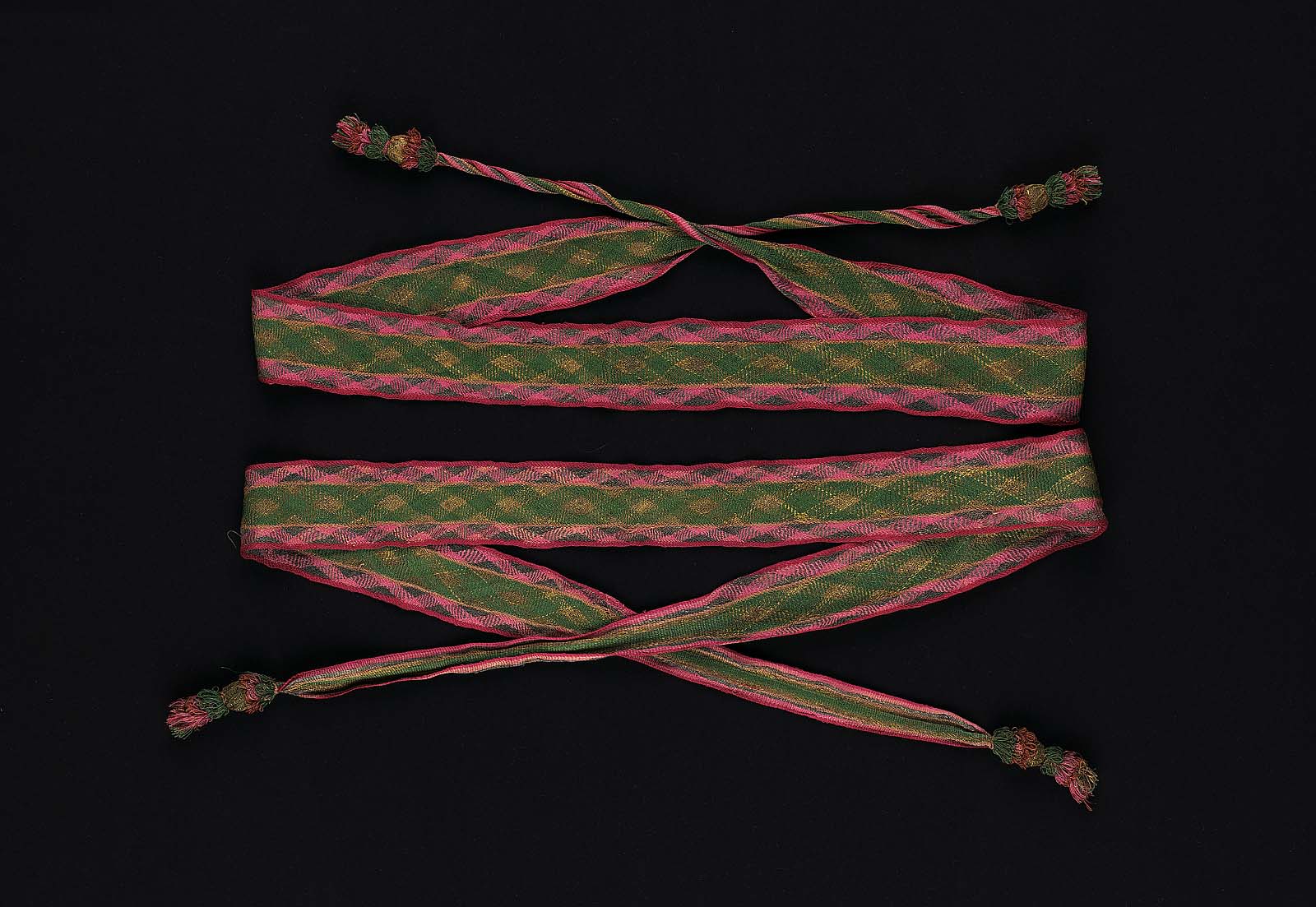
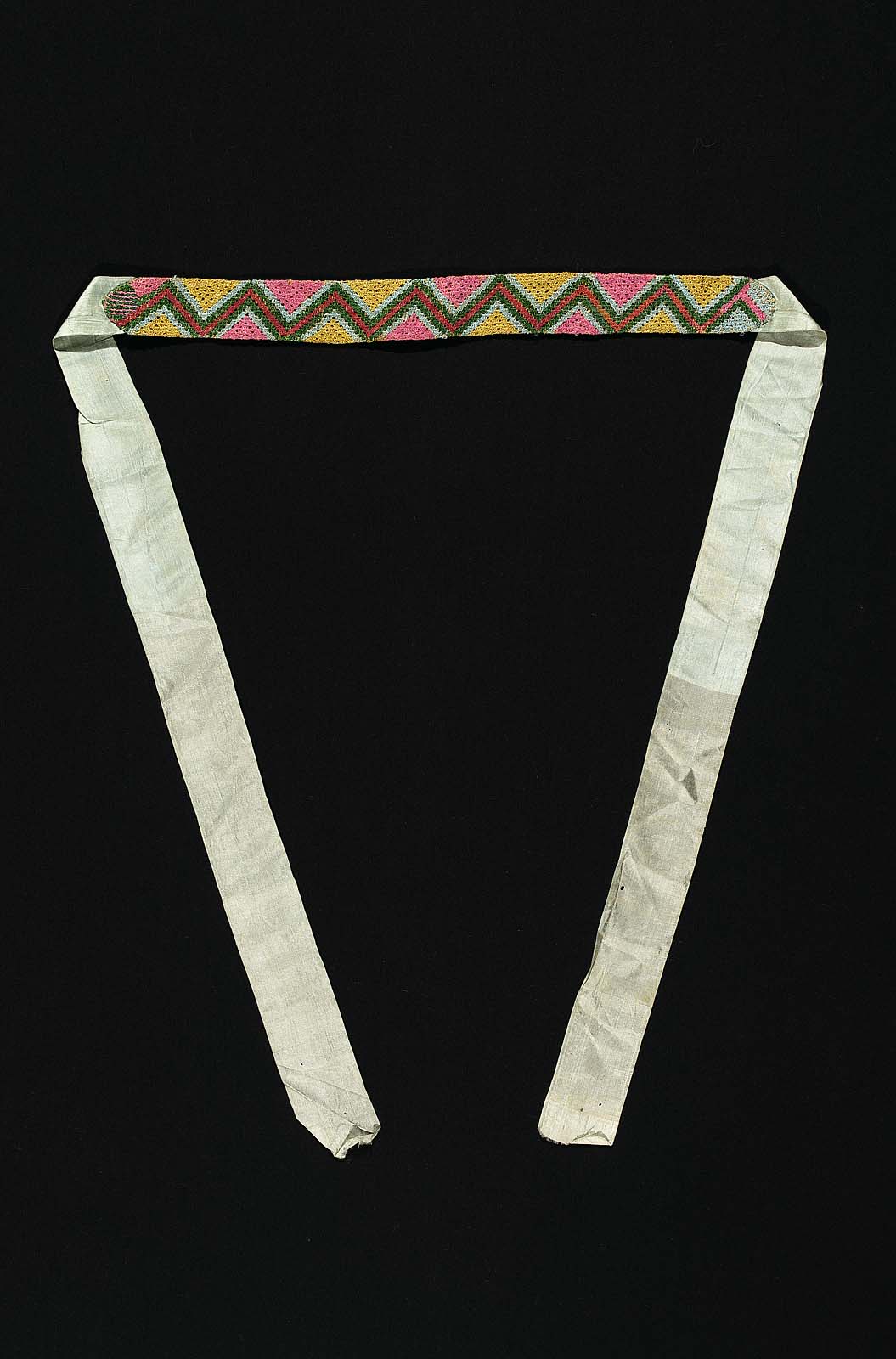
It is perhaps not surprising that people associate snakes more with gardens than with garters, because our mental concept of what a garter is has changed quite a bit since this family of non-venomous North American snakes acquired its name in the 1700s. Back then, garters did not look like this  (that would be a pretty bizarre snake):

but often more like the two garters (one 16th-century Italian, the other 18th-century American) at the top of this post.  They had evolved from the basic woven garters of the Middle Ages, which probably looked something like this:


You can immediately see why a European coming on a snake like this in his North American travels, and just possibly fantasizing about undergarments at the time, would be inspired to call it a "garter snake". The one below looks particularly as if someone had woven it a nice garter-like suit.


The word "garter" came into English, like many garment-related words (including "garment" itself) from French after the Norman Conquest. In Old French the garet (modern French jarret) was the back of the knee (something for which we don't have a word in English). This was where garters were usually fastened. The word ultimately derives from the word for "leg" in the Celtic language of the pre-Roman inhabitants of Gaul.


P.S. If you find the English language fascinating, you might enjoy regular updates about English usage and word origins from Wordlady. Receive every new post delivered right to your inbox! If you are not already subscribed, you can either:

use the subscribe window at the top of this page
OR
(if you are reading this on a mobile device): send me an email with the subject line SUBSCRIBE at wordlady.barber@gmail.com

Privacy policy: we will not sell, rent, or give your name or address to anyone. You can unsubscribe at any point.


Follow me on twitter: @thewordlady


Monday, September 14, 2015

Nonplussed about nonplussed

Friends of mine recently had a facebook discussion about the meaning of "nonplussed" (also spelled "nonplused" by Americans). One thought it meant "confused" and the other "unperturbed".  There is indeed cause for confusion, because this word is used with both these sometimes contradictory meanings. 

Although "so surprised and confused that one is unsure how to react" is the original meaning of "nonplussed", the second, "unfazed", meaning arose in North America in the 1960s. It has become so pervasive that, in Canada at least, according to the surveys we did for the Canadian Oxford Dictionary, it has become the dominant meaning of the word. Indeed, many Canadians we asked were not even aware that there WAS a "confused" meaning of "nonplussed". When matters reach this point, it is clear that the word has changed its meaning, and no admonitions that "this is not standard" (as found in many dictionaries) can stop it.

However, because of these very divergent senses, I would recommend that you avoid using this word in writing unless the context makes the meaning absolutely unambiguous.

It's an odd word, isn't it?  It comes from classical Latin nōn plūs (not more, no further). In the 1500s, when English speakers just adored making English more Latinate, we made this Latin phrase into an English noun, "non plus" (a state in which no more can be said or done; an inability to proceed in speech or action; a state of perplexity or puzzlement; a standstill). You could be at or in a nonplus, or reduced to a nonplus. As is usual with English, it didn't take long for this noun to be turned into a verb, so that by the 1600s, people who were paralyzed by perplexity were "nonplussed". 

What does "nonplussed" mean to you?


P.S. If you find the English language fascinating, you might enjoy regular updates about English usage and word origins from Wordlady. Receive every new post delivered right to your inbox! If you are not already subscribed, you can either:

use the subscribe window at the top of this page
OR
(if you are reading this on a mobile device): send me an email with the subject line SUBSCRIBE at wordlady.barber@gmail.com

Privacy policy: we will not sell, rent, or give your name or address to anyone. You can unsubscribe at any point.


Follow me on twitter: @thewordlady


About Me

My photo
Canada's Word Lady, Katherine Barber is an expert on the English language and a frequent guest on radio and television. She was Editor-in-Chief of the Canadian Oxford Dictionary. Her witty and informative talks on the stories behind our words are very popular. Contact her at wordlady.barber@gmail.com to book her for speaking engagements; she can tailor her talks to almost any subject. She is also available as an expert witness for lawsuits.