Welcome to the Wordlady blog!

This blog is about the fascinating, fun, and challenging things about the English language. I hope to entertain you and to help you with problems or just questions you might have with spelling and usage. I go beyond just stating what is right and what is wrong, and provide some history or some tips to help you remember. Is something puzzling you? Feel free to email me at wordlady.barber@gmail.com.
You can also order my best-selling books, Six Words You Never Knew Had Something to do With Pigs and Only in Canada You Say. Fun and informative!

Subscribe!

Subscribe! Fun facts about English delivered weekly right to your inbox. IT'S FREE! Fill in your email address below.
Privacy policy: we will not sell, rent, or give your name or address to anyone. You can unsubscribe at any point.

Search This Blog

Showing posts with label Canadian English usage. Show all posts

Friday, April 8, 2016

No rhyme or reason

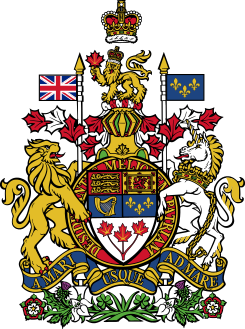
Coat of arms of Canada.svg
There's a reason for those thistles and shamrocks

A Vancouverite facebook friend of mine recently posted that she had "rhymed off" her telephone number to someone. 

I leapt on it, as I am wont to do. "Did you know that 'rhyme off' is a CANADIANISM?" I exulted triumphantly (and felt quite smug when a few Americans chimed in to say that they had indeed been perplexed by her usage). "Ha!" said I. "Seeeeee! Other people don't use this!"

But I was much deflated the very next day when the First Law of Lexicography (The minute you make a pronouncement about a word not being used, you will be sure to hear it or see it in the mass media within 24 hours) raised its ugly head. Thanks to another facebook post, I learned that a certain Ross O'Carroll-Kelly (a name so cartoonishly Irish that it is, not surprisingly, a pseudonym) wrote this in The Irish Times
Sorcha goes, “Oh my God, Ross, this is the most embarrassing thing you’ve ever done to me!”
I’m pretty sure it’s not. I could rhyme off a list, although I’m not sure it would help the situation.
Was I -- gasp -- WRONG about "rhyme off"?

The OED did not include "rhyme off" when they revised the entry for "rhyme" in 2010. Not surprising that they overlooked it, considering that there are only two instances of the phrase (both from Scottish speakers) in the 1.6 BILLION words of British Hansard (the record of the debates in the British parliament) between 1805 and 2005. Only one example (from Ireland) appears in the 100 million words of the British National Corpus. So it certainly isn't used in English English. 

The 1.9-billion word corpus of Global Web-based English has only 
5 examples from the UK, three of those being definitely Scottish, 
5 from Ireland,
none from anywhere else,
but a significant
18 from Canada
In contrast, in a mere 50 million words of the Strathy Canadian corpus, "rhyme off" appears 9 times. 

So I think we can still claim Canadian citizenship for this word. 

Or perhaps we should say Canadian landed immigrant status, because it seems we inherited it from our numerous Scottish and Irish settlers.

The New Partridge Dictionary of Slang and Unconventional English has this entry:

rhyme off verb to recite; to talk (UK: SCOTLAND) From Scottish dialect rame (to talk nonsense; to reiterate): "For one thing, rhyming off the places he'd broken into."
The OED also has an entry for "rame":
Of uncertain origin.
Scottish, Irish English (northern), and English regional (northern)
To shout, cry aloud, scream; to keep up the same cry, to repeat the same thing continuously; to complain persistently.

So it would seem that "rhyme off" is actually a corruption by folk etymology of "rame off", and has nothing really to do with rhymes.  Clearly, it landed on fertile soil when it arrived in Canada, where it has continued to thrive

Tell us about YOUR usage of "rhyme off". Where are you from, and do you use it/recognize it, or not

P.S. If you find the English language fascinating, you might enjoy regular updates about English usage and word origins from Wordlady. Receive every new post delivered right to your inbox! You can either:

use the subscribe window at the top of this page


OR


(if you are reading this on a mobile device): send me an email with the subject line SUBSCRIBE at wordlady.barber@gmail.com
Privacy policy: we will not sell, rent, or give your name or address to anyone. You can unsubscribe at any point.

Monday, January 24, 2011

Canadian spelling

I was surprised just now to see this in an Ontario government job posting:
"•You have demonstrated knowledge of and the ability to interpret the Ontario Human Rights Code and the effect of discriminatory attitudes, behaviors and practices."
"Behaviour" without a "u"? Is this a sign that Canadians' long-held preference for British spellings on -o(u)r words is waning? Or simply that someone just let an American spellchecker make the decisions? Fascinating.

Sunday, September 12, 2010

Upward(s) and onward(s)

Recently someone asked me which was correct: "toward" or "towards".

Today the sternly reproving red squiggle of my mailer's spellchecker attempted to persuade me that my favourite, "towards" was "incorrect". But both "toward" and "towards" are correct in English. It seems that the British favour "towards" and the Americans "toward", but both are used on both sides of the Atlantic. When we researched the Canadian Oxford Dictionary, we did a survey of Canadians and found, as is so often the case with Canadian usage, that they were divided about 50/50 between the two, perhaps with a slight edge for "toward".

In Old English, the adjective and preposition ended in -ward, a suffix meaning "in the direction of"; as in German, -s was an adverbial ending, so "towards" was an adverb, but even back then it was being used as a preposition as well, even by such people as King Alfred the Great. Of course, nowadays we no longer have an adverb "towards" at all; it is only a preposition. You cannot say "I didn't know which way to go so I went toward(s)." You have to go toward(s) something.

There are many words in this family: backward(s), forward(s), upward(s), downward(s), onward(s), heavenward(s), etc. Unlike "toward(s)", which is a preposition, these other words are adverbs -- he moved backward(s) -- but also adjectives, in which case only the s-less form is used -- a downward spiral.

This is what the OED has to say about the -ward(s) suffix
"In English the history of -wards as an adverb suffix is identical with that of -ward ; beside every adverb in -ward there has always existed (at least potentially) a parallel formation in -wards, and vice versa. The two forms are so nearly synonymous (the general sense of the adverbs being ‘in the direction indicated by the first element of the compound’) that the choice between them is mostly determined by some notion of euphony in the particular context; some persons, apparently, have a fixed preference for the one or the other form."

The pronunciation of "toward(s)" is also interesting. An older-fashioned pronunciation is "tord(s)"; the much more common current two-syllable pronunciation was apparently looked down upon as recently as the beginning of the 20th century, as the OED, which included it only as the last of four possibilities when the entry was edited in about 1910, has this note: "[this] pronunciation is not recognized in any modern dictionary, British or American, nor apparently by any orthoepist; but it appears to be the prevailing one in London and the south of England."

"Forward(s)" is an interesting case. It is quite unusual for people to use "forwards" in the phrase "look forward to" (although I have a friend who does say "look forwards to", and judging by a Google search, he is not alone, though in a smallish minority).

And speaking of that word, may I vent my spleen against one of my pet peeves (I don't have many, but I do have them): the much overused phrase "going forward". Why can't people just say "In future"? Or, hey, just use the future tense of the verb?

Here's a cute thought: there used to be a word "fromwards" as well. Perhaps the thing to do when you find yourself in the company of someone who overuses "going forward" is to promptly move fromward(s)!

P.S. If you find the English language fascinating, you might enjoy regular updates about English usage and word origins from Wordlady. Receive every new post delivered right to your inbox! If you are not already subscribed, you can either:

use the subscribe window at the top of this page
OR
(if you are reading this on a mobile device): send me an email with the subject line SUBSCRIBE at wordlady.barber@gmail.com

Privacy policy: we will not sell, rent, or give your name or address to anyone. You can unsubscribe at any point.

Follow me on twitter: @thewordlady


About Me

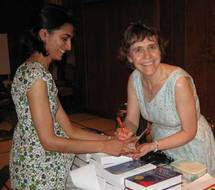
My photo
Canada's Word Lady, Katherine Barber is an expert on the English language and a frequent guest on radio and television. She was Editor-in-Chief of the Canadian Oxford Dictionary. Her witty and informative talks on the stories behind our words are very popular. Contact her at wordlady.barber@gmail.com to book her for speaking engagements; she can tailor her talks to almost any subject. She is also available as an expert witness for lawsuits.