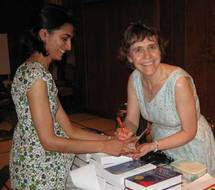
Welcome to the Wordlady blog!

This blog is about the fascinating, fun, and challenging things about the English language. I hope to entertain you and to help you with problems or just questions you might have with spelling and usage. I go beyond just stating what is right and what is wrong, and provide some history or some tips to help you remember. Is something puzzling you? Feel free to email me at wordlady.barber@gmail.com.
You can also order my best-selling books, Six Words You Never Knew Had Something to do With Pigs and Only in Canada You Say. Fun and informative!

Subscribe!

Subscribe! Fun facts about English delivered weekly right to your inbox. IT'S FREE! Fill in your email address below.
Privacy policy: we will not sell, rent, or give your name or address to anyone. You can unsubscribe at any point.

Search This Blog

Thursday, April 30, 2020

When a breakup is a disaster

The North Saskatchewan River near Edmonton, April 2020 photo courtesy Sherry Dawn Knettle

My friends in Western Canada have been posting pictures of nearby bodies of water with the ice going out.

It's "spring breakup", as we call it in Canada.

When I give talks about Canadian English, I always joke that non-Canadians, on hearing us talk about "spring breakup", must wonder, "What, they do that every year in Canada? March 1st, time to turf the old boyfriend and get a new one!"

I don't know if other varieties of English even have a word for this. Let me know if you do! Perhaps you just call it the "spring thaw".

This sense of "breakup" has existed in Canada since the mid-19th century. French has had a word for the phenomenon since the 1600s, one that may surprise you: débâcle.

Débâcle probably ultimately goes back to the Latin baculum (stick), via the French verb bâcler meaning "lock or bar (a door etc.) with a stick" and thence "close down navigation on a river". Débâcler therefore meant "open up navigation on a river". One can see how important a notion this would be in New France, which was likely locked up by ice from November through the end of March.

But débâcle also has a more specific sense, because the phenomenon can have catastrophic consequences. When the ice floes accumulate at a narrow point in the river or at its mouth, they back up the water behind them, causing flooding upstream. When the pressure of the rushing water and accumulated blocks of ice becomes too great, the ice jam will give way, causing a destructive rush of water and ice, and flooding downstream. This also is a débâcle.

(In Ottawa, city work crews literally blow up the Rideau River every year to prevent these ice jams and resulting inundations. I used to live near the river in Ottawa, and it was always the first sign of spring: "Let me just flip the calendar to March the Fir..." BOOOOM!!!)

Not surprisingly then, by the early 19th century débâcle took on a figurative meaning in French: a sudden change in a situation which results in a panicked rushing or fleeing, a catastrophic stampede. From there it was just a short step to "catastrophe, rout". 

Shortly thereafter, English adopted this figurative meaning of debacle, originally to mean a sudden downfall accompanied by a stampede, but now simply a usually sudden and ignominious failure, a fiasco. I don't think there is any need to use an acute accent and circumflex when spelling this word in English.

For synonyms of debacle, see my post about catastrophe and disaster.
Don't forget! Sign up for Wordlady Online starting with Hebrew and Yiddish Words in English. More information here:  https://katherinebarber.blogspot.com/2020/04/hebrew-and-yiddish-words-in-english.html


Monday, April 27, 2020

No man is an iland

Photo by Tom Winckels on Unsplash


A Wordlady reader has asked about the silent s in "island".

The s is an interloper.

Way back in Anglo-Saxon, the word was ígland, íland. The first syllable was derived from a word meaning ‘of or pertaining to water’, ‘watery’, and thus an íland was a ‘watery place, land surrounded by water’. Iland came to be the most common spelling in the Middle English period, and indeed survived until the 1600s, appearing in both the King James Bible and Paradise Lost.

But meanwhile the French arrived with their synonymous ile (in Modern French spelled île). Of course being English we decided to keep both the Anglo-Saxon word and the French one.

Ile was derived, with much French squishing, from Latin insula. In the 1400s and 1500s the French had a little flutter with Latinizing spellings and silent letters, so they started to spell it isle. But they smartened up and by the end of the 19th century settled on the modern spelling île, with the circumflex indicating the missing s (which they needn't have reinserted in the first place, but never mind).

Iland, meanwhile, as we have seen, had no historical connection to the Latin insula. But that didn't stop us from messing with the spelling. If ile comes from insula, then iland must too, and we'd better stick a silent s in both of them to show it. 

In the 1500s we started to do that, and by 1700 "island" and "isle" became the only correct spellings.

I suppose we should be grateful that we didn't end up with "insland".

For other words where the silent letter is based on false etymology, see ptarmigan and gyrfalcon

Don't forget! Sign up for Wordlady Online starting with Hebrew and Yiddish Words in English. More information here:  https://katherinebarber.blogspot.com/2020/04/hebrew-and-yiddish-words-in-english.html


Saturday, April 25, 2020

Of bananas and bandanas


The picture in my previous post which hilariously suggested "bananas" rather than "bandanas" as suitable face masks may have some of you wondering where the word bandana comes from.

We owe bandana, like some other fabric words (see also calico), to the highly coloured cloths that Europeans encountered when they arrived in India.  It came from a Hindi word designating a tie-dyed silk handkerchief, and probably came into English via Portuguese. Of course nowadays bandanas are much more likely to be made of cotton and are printed rather than tie-dyed.

Although "bandanna" is, surprisingly, the only spelling listed in the Merriam-Webster online dictionary, the two spellings, bandanna and bandana, are pretty much neck-and-neck in American English, and "bandana" is much more frequent in English over all.  It is the first spelling given in the Canadian Oxford Dictionary.

Banana, meanwhile, also came into English by way of Portuguese, but is originally from the name for the fruit in the West African language Wolof.

Don't forget! Sign up for Wordlady Online starting with Hebrew and Yiddish Words in English. More information here:  https://katherinebarber.blogspot.com/2020/04/hebrew-and-yiddish-words-in-english.html

Thursday, April 23, 2020

Word of the week: scarf


This screenshot is hilarious because of the reference to wearing "bananas" as face masks, but it also had some people asking whether "scarfs" is the correct plural for "scarf".
It wasn't till the 1800s that the knitted thing that keeps our necks and noses warm on wintry January days came to be called a “scarf” rather than a “muffler”. 
Originally, a scarf (escarpe in medieval French) was a kind of sling worn diagonally in which pilgrims carried the alms they begged on their way to a shrine. When the word came into English as “scarf” in the 1500s, it was used for a diagonal sash worn across the chest by military officers – now seen only decoratively in dress uniform but formerly a practical accessory for carrying things.
The Oxford English Dictionary, in an entry dating from 1910 which lists scarfs before scarves as the plural, has this to say about the plural:
"The original plural form scarfs has never gone out of use; but from the beginning of the 18th cent. the form scarves (on the analogy of halves, etc.) has been common, and in London commercial use it appeared to have become universal in the early 20th cent. No other noun of other than native origin had this change of f into v in the plural."
Personally I would only use scarves, and some searches in corpora show that scarves outnumbers scarfs in a ratio of about 20 to 1 in North American English and 35 to 1 in British English. But I'm curious to know what you would use. Let me know in the comments!
Some of you will be wondering where the verb scarf (eat) comes from. This is a fairly recent addition to English, dating from the 1960s, and is a variant of "scoff", the origin of which is unclear. 

Don't forget! Sign up for Wordlady Online starting with Hebrew and Yiddish Words in English. More information here:  https://katherinebarber.blogspot.com/2020/04/hebrew-and-yiddish-words-in-english.html

Tuesday, April 21, 2020

Wordlady Online: Problems with PayPal?

Hello Wordlady fans,

It has come to my attention that those of you who receive your Wordlady posts automatically as an email may not be able to use the PayPal button to sign up for my Hebrew and Yiddish talk, especially if you are on a mobile device.

To access the button that works, please use the link below to go directly to my blog and it should (I hope) work from there.

https://katherinebarber.blogspot.com/2020/04/hebrew-and-yiddish-words-in-english.html

Monday, April 20, 2020

Hebrew and Yiddish Words in English: Wordlady online


Hello all Wordlady fans!

I am offering Wordlady talks online via Zoom! If you haven't used Zoom before, it's pretty easy.

Payment is by PayPal. You can use your PayPal account if you have one, or if not, you can simply use your credit card. Just click or tap on the buttons below to take you to your shopping cart. Once you sign up, I will send you the link to connect to Zoom.

Tip: if you don't know what time 2pm Eastern is in your time zone, just type "2 pm Eastern Time" into Google and it will convert it for you.

Looking for one of my online courses but it's sold out or you can't make it for that time? I will be rescheduling more sessions. Drop me an email at wordlady.barber@gmail.com and I'll notify you as soon as the new session time is  up. Thanks for your patience. 


First up:

"English Schminglish: Hebrew and Yiddish Words in English" 
Hebrew and Yiddish words have enriched the English language for much longer than you may think, and continue to do so. From messiah to maven, sabbath to schnook, English wouldn’t be the same without its Jewish heritage. Whether you are familiar with Hebrew and Yiddish or not, this fun lecture will open your ears to an important source of English vocabulary.

Part 1:

  • Day: Thursday, May 7th, 2020
  • Time: 2:00 p.m. – 2:45 p.m. Eastern Time (please join the waiting room by 1:50 pm)
  • Location: online on zoom.us. Once you have paid for the talk, I will send you the meeting link
  • Fee: $15.00 Cdn (HST included)


Hebrew and Yiddish Words in English Part 1


Part 2:

  • Day: Friday, May 8th, 2020
  • Time: 2:00 p.m. – 2:45 p.m. Eastern Time (please join the waiting room by 1:50 pm)
  • Location: online on zoom.us. Once you have paid for the talk, I will send you the meeting link
  • Fee: $15.00 Cdn (HST included) 

Hebrew and Yiddish Words in English Part 2


Check out more Wordlady posts here
https://katherinebarber.blogspot.com/2020/03/

Best Actress in a supporting gown


Whenever the Academy Awards roll around, people have burning questions. 

Who will be best actor/actress? Which film will be the best picture? 

Who cares? 

We know what people are really interested in: the gowns.

In Late Latin, the word gunna meant "fur". By the 8th century this word was being used to mean a fur garment that elderly or sick monks were allowed to wear over their habits (it being pretty darn nippy getting up in the middle of the night in those chilly monasteries to sing one of the offices of the day). 

This was borrowed into Old French as goune, a word that has completely died out in French but survived in English after being borrowed in the 1300s. Originally it meant any flowing garment worn by either sex. This has survived in the scholar's gown worn as part of academic dress. 

Until the 18th century, "gown" was the ordinary name for a woman's garment, but it was then superseded by "dress", leaving "gown" to be used only for fancy dresses (or, as the OED inimitably puts it, "a dress with some pretension to elegance.")

It is somewhat ironic that "gown" is also used for that most un-fancy of attire, with no pretension to elegance whatsoever: the hospital gown. But, with news that fashion houses like Giorgio Armani have retooled their factories to make hospital attire (bravo them!), perhaps we will finally end up with elegant hospital gowns.

Copyright Katherine Barber 2012

About Me

My photo
Canada's Word Lady, Katherine Barber is an expert on the English language and a frequent guest on radio and television. She was Editor-in-Chief of the Canadian Oxford Dictionary. Her witty and informative talks on the stories behind our words are very popular. Contact her at wordlady.barber@gmail.com to book her for speaking engagements; she can tailor her talks to almost any subject. She is also available as an expert witness for lawsuits.